Introduction
Building a wardrobe that actually works isn’t about owning more — it’s about owning the right pieces, in the right proportions, that combine easily with each other. Wardrobe essentials for women don’t need to be trend-driven or expensive; they need to be versatile, well-fitted, and durable enough to earn their place through repeated wear.
People are buying differently this year — chasing quality and things that’ll last over another round of “new.” Prices are moving too. So instead of a bigger closet, 2026 is a smart year to build a smaller, sharper one.
Here’s what I’d actually put on that list, why each piece pulls its weight, and how to work toward owning them without blowing your budget in one trip.
1. A White Button-Down That Actually Fits
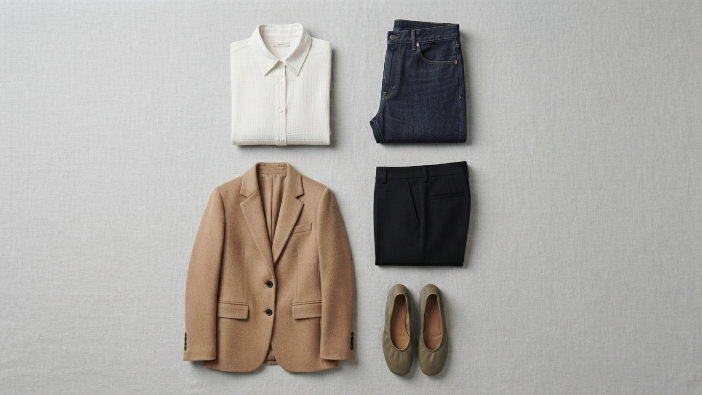
Not much works harder than a properly fitted white shirt. Layer it under a sweater, wear it alone with tailored trousers, throw it over jeans and it still looks intentional. Fabric matters more than people think here — go slightly heavier cotton. Thin, cheap versions turn see-through and lose their shape fast.
2. One Excellent Pair of Dark Jeans
Straight or wide-leg, doesn’t matter — what matters is that one really good pair beats three mediocre ones. Dark denim reads more polished across more situations and hides wear a lot better than light washes do. It’s genuinely one of the better investments on this whole list.
3. A Blazer in a Neutral Color
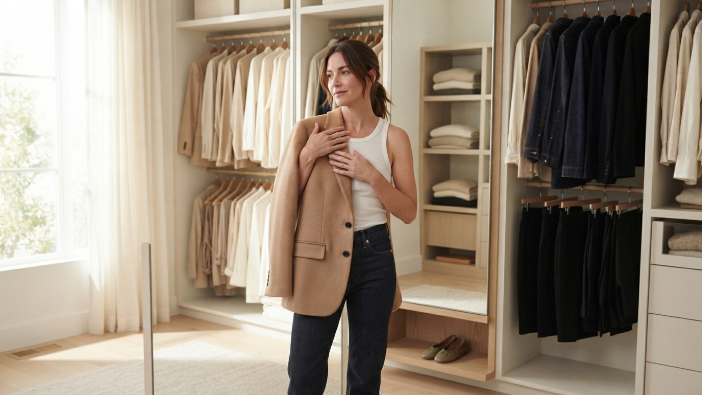
If I had to pick the single most transformative item here, it’s this one. Throw it over jeans and a tee and the whole outfit changes. Add structure to a dress. Wear it as outerwear when it’s mild out. Stick to neutrals — black, navy, camel, or the softer whites that are everywhere this year — so it actually goes with everything else you own.
4. A Real Wool Coat
Outerwear is the first thing people see on you, full stop. A well-made wool or wool-blend coat in a classic shape will outlast several seasons and a few trend cycles besides. This is one category where quality genuinely beats quantity — buy one good coat instead of three forgettable ones.
5. A Dress That Does Double Duty
One dress that works both dressed-up and dressed-down saves you an enormous amount of decision fatigue. A slip dress layers under a blazer for daytime and stands alone at night; a shift dress does the same trick with a slightly more structured shape.
6. A White Tee Worth the Money
This is the most-worn item in most closets, and it gets the least attention when people shop. Go slightly heavier cotton — it holds shape wash after wash, unlike the thin stuff that goes limp after a month. Given how often it’s actually worn, it’s worth spending a bit more here.
7. Flats You Can Actually Walk In
Loafers, ballet flats, a plain sneaker — whatever fits your life, but it needs to survive an actual day of walking, not just look good in a photo. This category gets more wear than almost anything else you own, so prioritize comfort and real construction over looks alone.
8. One Heel or Boot You Trust
A single reliable heeled shoe or boot in a neutral tone covers most dressier occasions — no need for a rotating collection. Pick based on how you actually live: a block heel if comfort matters, ankle boots if you’re on your feet a lot.
9. A Bag That’s Actually Structured
Big enough for your stuff, structured enough to look intentional rather than like you just grabbed whatever — this is one of the more overlooked basics out there. Neutral leather or a leather-alternative in a similar tone means it goes with almost everything.
10. A Cardigan or Light Knit
Adds warmth and texture without the bulk of a full sweater, which means it works across more of the year than heavier knitwear does. Layers over dresses, tees, button-downs — pretty much anything.
11. Black Trousers, Properly Hemmed
Different job than jeans — these cover the more formal or professional situations where denim just doesn’t cut it. Get them hemmed properly. Length affects how polished a whole outfit looks more than almost any other single detail.
12. A Scarf You’ll Actually Use
Neutral or subtly patterned, it adds color, texture, and a finished feel to a simple outfit — and it keeps you warm when it’s cold. Low cost, genuinely high impact. One of the better value items on this list.
13. A Few Pieces of Jewelry Worth Keeping
Jewelry’s growing faster than almost any other category in fashion right now, and it shows in how people are shopping. Worth treating a few good pieces — a simple chain, everyday earrings, a signature ring — as real wardrobe essentials instead of something you grab last minute.
14. Loungewear That’s Actually Comfortable
This one gets skipped in most essentials lists, but comfortable, well-made loungewear affects your day-to-day life more directly than almost anything else here. Doesn’t need to be a huge collection — one or two genuinely good sets beat a drawer full of stretched-out stuff.
15. One Piece That’s Just… You
A wardrobe built entirely around neutral basics needs at least one thing that’s purely personality — a loud coat, a printed skirt, jewelry nobody else would pick. This is where the practical, function-first list gets to have a little fun.
A Few Notes Worth Keeping in Mind
- Fit beats trend on anything worn weekly. The white tee, the jeans, the everyday flats — these benefit most from getting fit right, precisely because they’re worn constantly.
- Build this gradually. Add or replace one category every month or two rather than trying to overhaul everything in a single shopping trip.
- Consider secondhand for the investment pieces. Coats, blazers, and jewelry tend to hold up well used, and resale is growing a lot faster than new retail right now.
- Reassess by season. This list isn’t fixed. Depending on climate and lifestyle, your version might swap the heavy coat for lighter layers.
Does Any of This Actually Hold Up?
A few things worth knowing:
Courtney Carver’s Project 333 challenge asks people to pick 33 items total — clothes, shoes, accessories, jewelry, everything — and live with just that for three months while the rest stays packed away.
What people consistently report afterward is that it reveals which pieces they actually need day-to-day versus which ones were just taking up closet space. It’s a decent way to test any essentials list, including this one.
There’s also a well-known pattern that comes out of that same challenge: most people wear about 20% of their closet 80% of the time, while the other 80% still takes up all the space, attention, and honestly, guilt. That’s a pretty direct argument for a smaller list of real essentials over a big closet full of stuff you don’t reach for.
Jewelry’s rise backs up including it here specifically — it’s projected to grow at close to four times the rate of clothing through 2028, with branded jewelry growing especially fast, almost double the rate of unbranded pieces. That’s not a minor shift. It’s a real reason to treat a few good pieces as essentials rather than an afterthought.
And resale is reshaping how people source a lot of this list in the first place — coats, blazers, jewelry, bags — with the secondhand market projected to grow two to three times faster than new retail through 2027. Increasingly, “essential” doesn’t mean “bought new.”
Conclusion
A genuinely useful list of wardrobe essentials for women isn’t about accumulating more clothing — it’s about identifying the handful of versatile, well-made pieces that combine easily and get worn constantly.
Start with the categories you’re missing most, prioritize fit and fabric quality over trend-chasing, and build toward the rest gradually. The goal isn’t a bigger closet; it’s one where nearly everything works together.
Questions Worth Answering
What should I actually buy first if I’m starting from scratch?
A well-fitted white button-down, dark jeans, a neutral blazer, and one versatile dress. That combination covers the widest range of situations and is the smartest place to start.
How many pieces does a real capsule wardrobe need?
Most capsule approaches — Project 333 included — land somewhere around 33 total items, accessories and shoes included. The exact number shifts depending on your climate and how you actually live.
New or secondhand — does it matter?
Not really, as long as the quality’s there. Coats, blazers, and jewelry in particular tend to hold up well secondhand, and demand for buying them that way is growing fast.
How do I figure out what’s actually essential for me, specifically?
Track what you reach for over a month or two without thinking about it. Whatever keeps coming up is your real essentials list — not whatever a generic guide tells you.
Is it worth spending more on anything specific?
Generally, yes — on whatever gets worn most and is hardest to replace well. Coats, everyday shoes, jeans. That’s where fit and construction actually show.