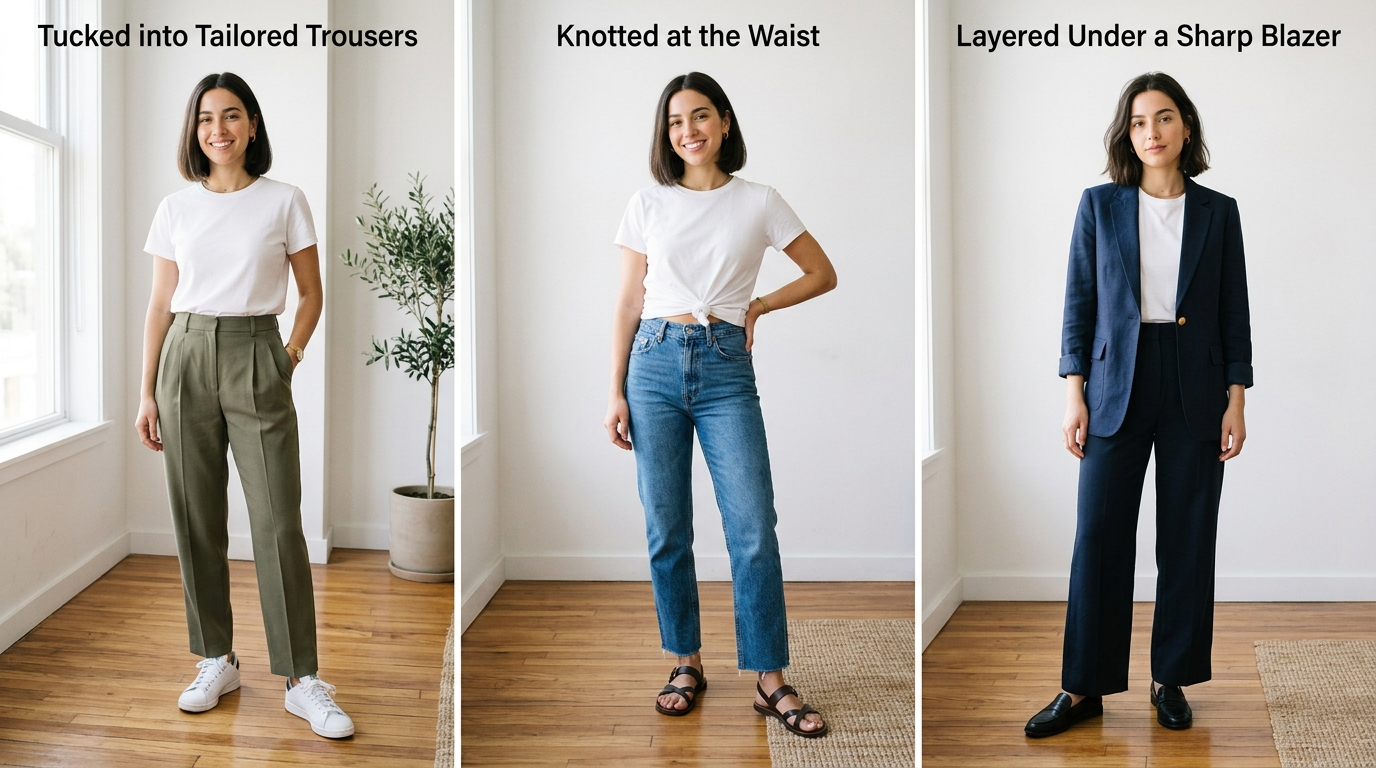
Here’s a small experiment worth trying: take the plainest t-shirt in your closet and wear it four different ways over four days. Tucked into trousers with a belt one day. Knotted at the waist over jeans the next. Layered under a blazer for a third look.
Left loose with a statement necklace for a fourth. Same shirt, four outfits that don’t look remotely related. That’s the entire secret to styling basic clothes — the garment barely changes, but everything around it does.
Most people think “basic” means drab and that fashionable ensembles need pricey or distinctive components. Actually, it’s usually the other way around.
A closet full of basic, well-fitting items offers more possibilities than one created around statement items since basics don’t clash with your dressing decisions around them. They are a blank canvas instead of a constraint.
Why Basics Get a Bad Reputation
The issue is wearing the basics exactly as they come, with no consideration given to fit, layering, or finishing touches; it is not the fundamentals themselves. Worn with whatever jeans are clean, a simple tee right out of the closet will always appear afterthought.
The same tee looks altogether different when tucked in, paired with the proper proportions, and completed with one deliberate item.
Tucking and Proportion Do More Than People Realize
One of the fastest ways to upgrade a basic outfit costs nothing: how you tuck it. A front tuck breaks up a boxy silhouette and defines your waist without needing a fitted top. A full tuck works well with high-waisted bottoms and creates a cleaner line.
Even a loose French tuck — just the front corner tucked in — can transform a shapeless top into something that looks styled rather than thrown on.
The proportion is equally important. Combining a loose top with fitted bottoms or a fitted top with comfortable pants avoids an ensemble from seeming either too stiff or too sloppy.
This one change will fix more “why doesn’t this look right” situations than nearly any other technique.
Layering Turns One Outfit Into Three
The first layer, not the complete ensemble, is a basic tee or button-down. Including a cardigan totally transforms the atmosphere; replacing it with a blazer makes the same basic ensemble work-ready; a denim jacket pulls it toward weekend casual.
Laying is the fastest approach to wear the same basic items without ever overtly duplicating an outfit; it’s not just about warmth.
Let Texture Do the Work Color Can’t
When an outfit is built entirely from neutral basics, texture becomes the detail that keeps it visually interesting. A ribbed knit against smooth denim, a structured blazer over a soft tee, a chunky scarf against a fine-knit sweater — these contrasts add depth to an outfit without needing bold colors or patterns to carry it.
Accessories Are the Difference Between Plain and Polished
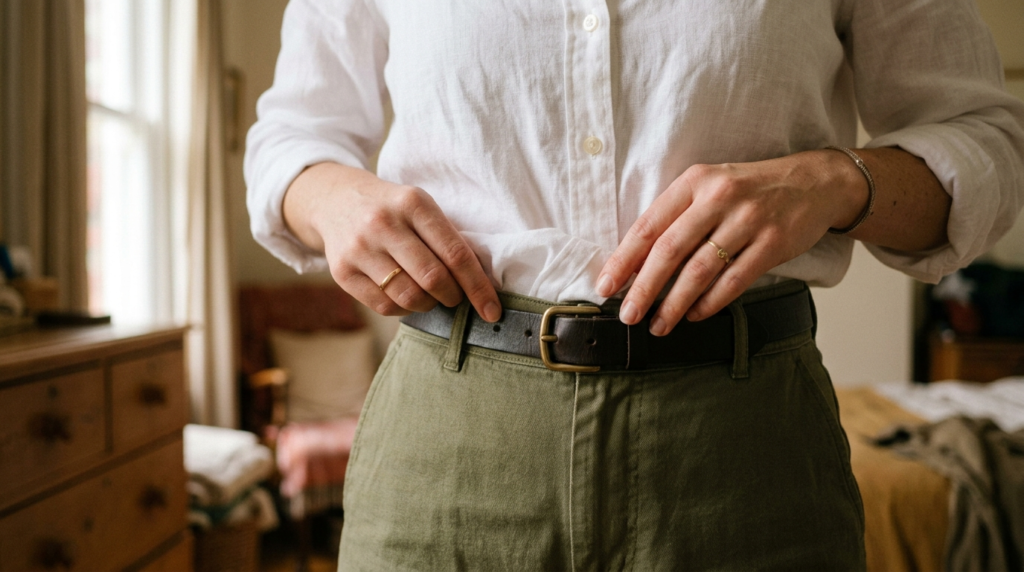
This is the step most people skip most often, and it offers the most visible reward. An ensemble seems deliberate instead of default with a belt at the waist, a stack of basic rings, a structured bag instead of a floppy one, or a scarf knotted a certain way. The accessories are doing the hard work; the base of the clothing hardly needs to alter.
Building Outfit Formulas You Can Repeat
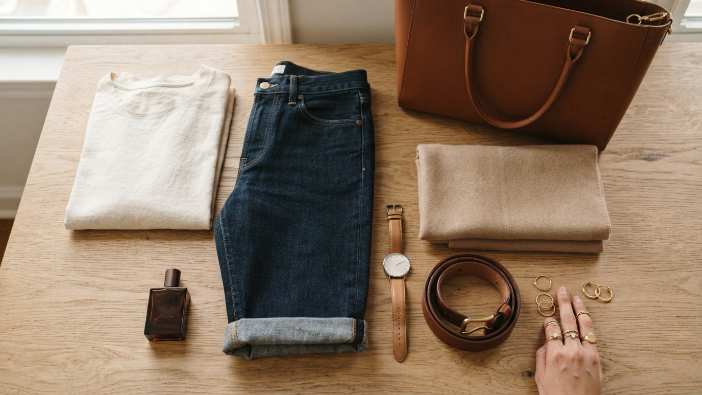
It helps to create a few recurrent formulas instead of styling from scratch each morning: fitted top plus wide-leg trouser plus loafers; oversized shirt plus straight jeans plus ankle boots; knit plus midi skirt plus flats.
Getting dressed becomes a quick, confident decision once you have three or four formulae that reliably fit your body and way of life.
Basics Are the Foundation, Styling Is the Skill
The real shift in thinking is this: basics aren’t the finished product, they’re the raw material. The actual outfit happens in the choices layered on top — fit, tuck, texture, and accessories. Once that clicks, a closet full of “boring” plain pieces starts to feel like the most flexible wardrobe you’ve ever owned.
FAQ
How do I make a plain t-shirt look stylish?
Try tucking it in — front tuck or French tuck both work — pairing it with a well-fitted bottom, and adding one intentional accessory like a belt or statement earrings. Layering a jacket or cardigan over it also instantly elevates the look.
What’s the easiest way to style basic clothes for work?
Layer a blazer over a simple top and trouser combination, tuck the top in, and add structured shoes like loafers or low heels. This turns casual basics into something office-appropriate in minutes.
Do basic clothes work for going out at night?
Yes — swap flats for heels, add statement jewelry, and consider a bolder lip or eye look. The basics stay the same; the accessories and finishing touches shift the outfit’s mood entirely.
How many basic pieces do I actually need to create varied outfits?
A small rotation of five to seven basics — a couple of tops, a knit, jeans, and trousers — combined with layering pieces and accessories can realistically create dozens of distinct outfits.
Why do my basic outfits look unfinished?
Often it comes down to missing one of three things: proper fit and tucking, a layering piece, or an accessory. Adding just one of these usually resolves the “unfinished” feeling.
Is it possible to look stylish without spending money on new clothes?
Absolutely — most styling upgrades come from how you wear what you already own, not from buying more. Tucking, layering, and accessorizing existing pieces differently costs nothing.