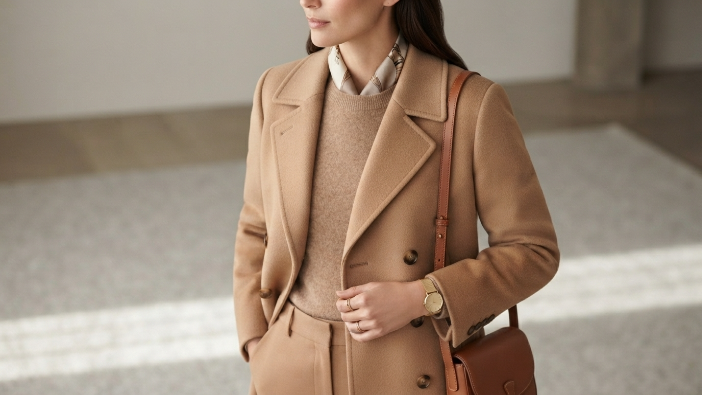
Here’s something I’ve learned after years of styling people: the price tag on a garment tells you almost nothing about how expensive it’s going to look on a body, in a room, in a photo.
I’ve watched $40 pieces read like designer staples. I’ve also watched $400 pieces look sloppy and cheap the second someone put them on. Figuring out how to make clothes look expensive was never about spending more — it’s about noticing the small stuff that separates “polished” from “careless.”
In my experience, most luxury fashion tips boil down to the same four things: fit, fabric, color coordination, finishing details. Get those right and you can apply the same logic at basically any budget.
Here are the ten things I actually rely on, in the order I’d tackle them if I were starting from scratch today.
Why Some Outfits Look Expensive and Others Just Don’t
Perceived luxury has surprisingly little to do with brand names. What our brains actually register as “expensive” is a fairly consistent set of cues: clean lines, a coherent color story, fabric that drapes well, fit that’s actually right.
Once you know what those cues are, you can build them into an outfit at nearly any price point — it’s a styling skill, not a shopping budget. Classy style, at the core of it, is really a discipline of restraint. Knowing what to leave off an outfit does as much work as knowing what to put on it.
I think a lot of people assume looking expensive requires a totally different shopping strategy — better stores, bigger budget, whatever. But most of the actual transformation happens after you’ve already bought the thing. It’s tailoring.
It’s how you care for fabric. It’s the small styling decisions. Which is genuinely good news, because it means you can apply all of this to your closet right now, today, without waiting on a bigger paycheck.
The 10 Ways
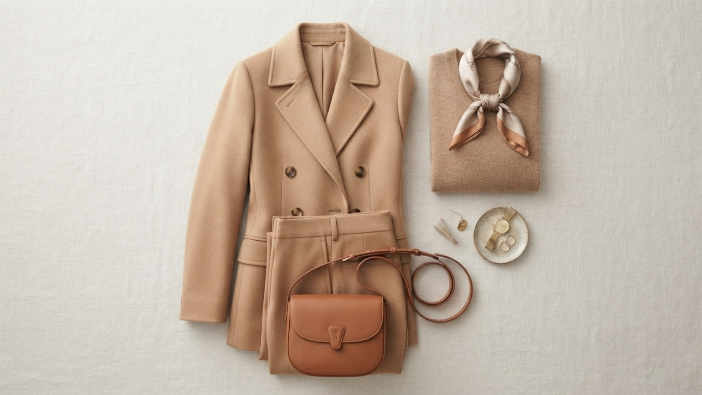
1. Prioritize Fit Above Everything Not an exaggeration: this is the single biggest factor. A $30 t-shirt that fits perfectly will beat a $150 shirt that doesn’t, every time. Tailor your key pieces, even the cheap ones — it’s how you get that custom-made look without the custom-made price.
I look at three spots when I’m checking fit: shoulders, hemline, waist. Nail those and you’ve done more for how an outfit reads than almost any other adjustment you could make. It’s also usually a fast, cheap trip to a tailor — not the investment people assume it is.
2. Choose Quality Fabrics Cotton, wool, silk, linen — natural fibers just move differently than synthetics. They photograph better, they wrinkle less dramatically, they feel heavier and more substantial in the hand. When you’re shopping, check the fabric composition tag before you check the price.
Even a small percentage of natural fiber blended into something mostly synthetic makes a real difference in how a piece drapes and holds up. Worth checking even on the cheap stuff.
3. Stick to a Cohesive Color Palette An outfit built around two or three coordinated colors plus one neutral reads as intentional in a way that mixing five unrelated colors never will. This is one of the simplest luxury fashion tips out there, and also one of the most skipped.
4. Iron and Steam Everything Wrinkles will make even a genuinely expensive piece look cheap in about two seconds flat. A crisp, well-pressed garment signals care. That’s it — that’s the whole trick, and it’s free.
5. Invest in Great Shoes Shoes do more visual heavy lifting than people give them credit for. Clean, well-kept shoes in a classic shape elevate everything around them. Worn-out or overly trendy shoes drag the whole outfit down with them.
6. Simplify Your Accessories Real luxury style is rarely “more of everything.” I’d rather see one or two genuinely good accessories than five mediocre ones piled on together. Restraint reads as expensive far more reliably than excess ever does.
7. Pay Attention to Proportions Fitted top with wide-leg trousers. Oversized coat with something slim underneath. Balancing tight and loose creates a silhouette that looks deliberate instead of accidental.
8. Remove Visible Logos Counterintuitively, loud branding often makes something look cheaper, not more expensive. Minimal or no visible logo tends to create the more sophisticated impression, because attention shifts to the cut and quality of the garment rather than its label.
9. Care for Your Clothes Properly Pilling, fading, stretched-out fabric — all of it ages a garment fast, no matter how good it originally was. Proper washing, proper storage, the occasional repair. It’s maintenance, not glamour, but it’s the difference maker.
10. Master the Art of Layering A blazer over a fitted top. A scarf tucked into a coat collar. Thoughtful layering adds depth and reads as intentional styling rather than something thrown on in a hurry. Bonus: one outfit, several layers, works across a dozen different settings just by adding or peeling one off.
Things I Keep Coming Back To
- Tailor everything, no exceptions on price. This single habit probably has the biggest visual payoff of anything on this list.
- Buy fewer, better pieces. A small closet of quality items will consistently beat a packed closet of mediocre ones.
- Match your metals. Keep jewelry tones consistent within one outfit — random gold and silver together can quietly undercut a look you’d otherwise nail.
- Iron collars and cuffs first. These are the spots people’s eyes go to first, so they’re the ones that pay off the most attention.
- Go structured over slouchy with bags. A structured handbag elevates an outfit more reliably than a soft, casual one.
- Don’t skip grooming. Clean hair, decent skin care — it works in tandem with the clothes, not separately from them.
- Steam as a habit, not an occasional chore. Do it every time, not just when you remember, and your whole wardrobe stays consistently sharp.
Mistakes That Undo Everything Else

- Leaning on visible logos to signal quality instead of just nailing fit and fabric, which matter a lot more in practice.
- Mixing too many colors or patterns in one outfit and ending up with noise instead of a look.
- Wearing wrinkled or poorly maintained clothing — even the nicest garment loses its impact the second it isn’t cared for.
- Over-accessorizing instead of picking one or two pieces that actually complement the outfit rather than compete with it.
- Ignoring shoe condition, which quietly sinks even a genuinely well-put-together outfit, since it’s one of the first things people notice.
Final Thoughts
Making clothes look expensive was never really about spending more money. It’s fit, fabric, color coordination, and actually maintaining what you own — that’s the whole formula.
In my experience, the outfits that look the most expensive are almost never the ones that actually cost the most. They’re just the ones that were thought through, piece by piece.
Try two or three of these and you’ll probably notice the shift pretty quickly, in how your own closet reads to you and to everyone else. I tell people this a lot: looking expensive is a mindset before it’s ever a budget.
Once you start noticing fit and fabric and color in your own closet, you naturally start making better calls — with what you already own, and with whatever you decide to buy next.
FAQ
Can inexpensive clothes really look expensive?
Yes, genuinely. Fit, fabric care, and color coordination matter far more than the original price tag ever will.
What’s the fastest way to elevate an outfit?
Tailoring. Nothing else on this list comes close in terms of speed versus payoff.
Do logos make clothing look more luxurious?
Not really — minimal or no visible branding usually reads as more sophisticated.
How important is fabric quality?
Very. Natural fibers drape, move, and photograph better than most synthetics, full stop.
Should I avoid trends entirely to look classy?
No, just be selective. Pick trends that layer onto quality basics rather than swapping your whole wardrobe out for them.
How does color coordination affect perceived cost?
A tight, cohesive palette reads as deliberate and planned — which is exactly the impression higher-end style is going for.
What role do accessories actually play?
Fewer, better accessories consistently read as more luxurious than a pile of lower-quality ones.