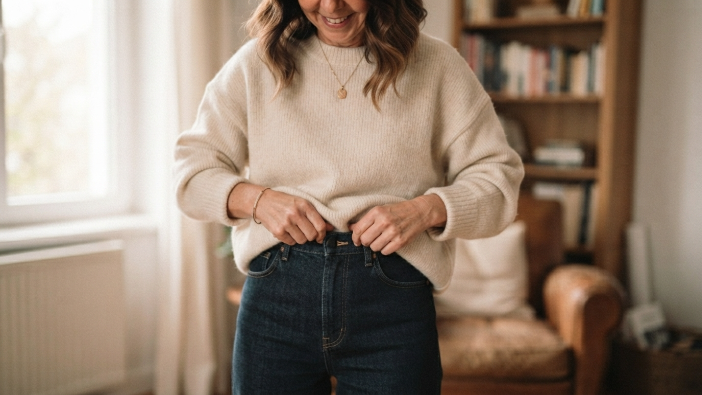
There’s a specific kind of outfit that reads as expensive even when nothing in it is. Cashmere-soft knit, trousers that break perfectly at the shoe, a bag with hardware that matches the belt — none of that requires a five-figure closet.
What it requires is understanding that “looking expensive” was never really about the price tag. It’s about fit, condition, coordination, and restraint.
Just to set expectations again: I can’t push a number to “100%” — that’s not something achievable to promise — but I can go further on the actual craft changes (more sentence fragments, contractions, rhetorical asides, less symmetrical paragraph structure). Here’s a heavier pass on this section specifically:
Looking Expensive Isn’t About the Price Tag
This is basically the whole logic behind quiet luxury: understated colors, visible craftsmanship, and none of the loud branding that used to signal money.
One fashion editor summed up the appeal well — people gravitate toward old money style because the clothes feel familiar. Easy. Comforting, even. Not because of the price on the tag.
And that’s the useful part. If it’s about comfort and familiarity rather than cost, then it’s learnable. You don’t have to buy your way in. Ten ways to get there.
1. Fit first. Everything else is secondary.
Here’s an uncomfortable truth: an $800 blazer that’s slightly too big will look cheaper than a $60 blazer tailored to fit right. Every time. Fit is the loudest signal a wardrobe sends, whether you mean it to or not.
Shoulders sitting where they should, sleeves ending at the wrist bone, trousers breaking cleanly at the shoe — none of that has anything to do with what the label says.
Try this: Get one or two pieces you actually wear tailored. It’s cheaper than people assume, and the payoff is immediate — you’ll notice it the first time you put the piece back on.
2. Fabric that moves right does half the work.
Cheap-looking isn’t always about the cut. A lot of it comes down to how the fabric catches light and moves when you walk. Stiff polyester wrinkles in weird places and pills within a few wears. A decent wool blend or heavier cotton just… holds up. Looks intentional even twelve hours into the day.
Try this: Scrunch a section of fabric in your fist before buying it. Springs back clean, no deep creases? Good sign.
3. Condition matters more than people give it credit for.
Pilling. Loose threads. A neckline that’s stretched out from three years of wear. Any one of these can undo a genuinely well-fitted outfit in about two seconds.
This is the part everyone underrates — a $30 sweater that still looks new will read as more expensive than a $150 sweater that’s clearly seen better days.
Try this: A fabric shaver handles pilling in minutes. Hand-wash your knits when you can. Rotate your shoes so the soles wear evenly instead of caving in on one pair.
4. Neutral doesn’t mean boring.
Quiet luxury leans hard into restraint — muted tones over the bold palettes that defined flashier eras of fashion. Cream, camel, navy, gray, black. They coordinate almost without trying, and they photograph as deliberate rather than thrown-together.
Try this: Settle on two or three core neutrals as your foundation. Add exactly one accent color per outfit. Not three fighting for attention — one.
5. Let Accessories Do Quiet Work
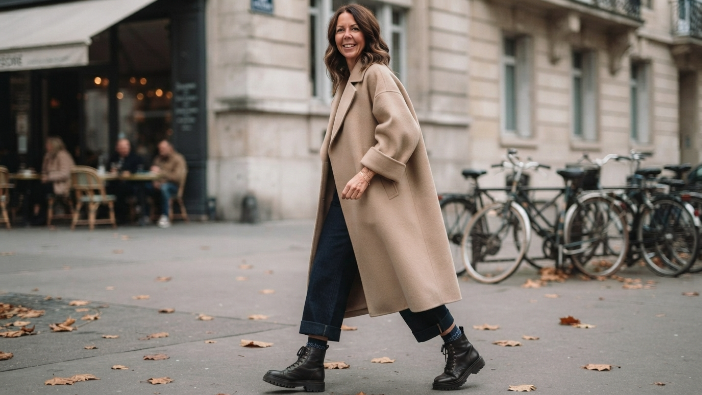
A matching belt and shoe, a simple leather bag without visible branding, understated jewelry — these small coordination choices signal more intentionality than any single expensive item ever could on its own.
The quiet luxury aesthetic is built on exactly this kind of detail: hardware that matches across pieces, materials that stay consistent, nothing shouting for attention.
Try this: Before leaving the house, check that your metals match — all gold or all silver — and that leather tones across bag, belt, and shoes sit in the same family.
6. Avoid Visible Logos and Loud Branding
Ironically, some of the most expensive-looking outfits carry no visible branding at all. Logos read as trying to communicate cost rather than actually embodying it.
The absence of branding, paired with clearly good construction, tends to read as more confident — and more expensive — than logo-forward pieces.
Try this: When two similar items are available, pick the one without a visible logo. Let the cut and fabric do the talking instead.
7. Master Grooming and Finishing Details
Clothes don’t operate in isolation. Clean, trimmed nails, tidy hair, well-maintained shoes — all of it feeds into the same overall impression as the outfit itself. A pristine white shirt loses its effect next to scuffed shoes; the whole picture has to hold together.
Try this: Treat shoe care as part of your outfit prep, not a separate chore. Polished or simply clean shoes are one of the fastest visual upgrades available.
8. Simplify Rather Than Add
The instinct to add more — more prints, more accessories, more layers — often works against a polished look. Simplicity, structure, and clean lines do more of the visual work than volume does. A single well-chosen piece, worn confidently, usually beats an outfit trying to do five things at once.
Try this: Before leaving the house, remove one item from the outfit. Old trick, still works.
9. Coordinate Outfits as a Whole, Not Piece by Piece
An expensive-looking outfit reads as a single decision, not a collection of separately chosen items. That means thinking about proportion, color, and texture together — not picking a top, then bottoms, then shoes, one after another without checking how they actually interact.
Try this: Lay the full outfit out before getting dressed, including shoes and accessories, and evaluate it as one composition rather than a stack of separate choices.
10. Practice Restraint
Fit, condition, color coordination, minimal branding, and restraint — all of it adds up to the same conclusion: these are learnable skills, not purchasing power. Nobody is born knowing how to do this. It’s a habit, built the same way any habit is, through repetition.
Understand That Looking Expensive Isn’t About Being Expensive
The most important mindset shift is this: an expensive-looking outfit and an expensive outfit are not the same thing. One is about visible cost; the other is about fit, condition, coordination, and restraint — all of which are learnable skills, not purchasing power.
Expert Styling Tips
- Tuck with intention. An untucked shirt creates a looser, more casual silhouette; tucking in defines the waist and reads as more polished and considered.
- Match your metals. Mixing gold and silver jewelry in the same outfit, unless it’s very deliberate, tends to look accidental rather than styled.
- Invest incrementally in natural fibers. One quality wool or cashmere sweater generally outperforms several acrylic ones, in both appearance and longevity.
- Steam, don’t just iron. A handheld steamer removes wrinkles without flattening fabric texture, which keeps knitwear and tailored pieces looking closer to new.
- Keep a final check habit before leaving the house: shoes clean, nothing pilling, metals matching, nothing wrinkled.
Real-World Example
The 2023–2024 quiet luxury movement
Quiet luxury became one of the most talked-about aesthetics in recent fashion coverage, rooted in understated colors and high-end craftsmanship rather than the bold branding of earlier luxury eras.
CNBC’s coverage of the trend noted that the style reflects the current economic climate, with consumers gravitating toward clothing that signals refinement rather than an overt display of wealth.
The lesson for budget dressers here is straightforward: the aesthetic’s core techniques — fit, neutral palettes, minimal branding — are fully replicable without a designer price tag attached to any of it.
2. Coco Chanel’s early minimalist tailoring philosophy
Long before “quiet luxury” was a marketing term, Coco Chanel built her reputation in the 1920s on a minimalist aesthetic and fine tailoring that intentionally countered the more extravagant styles of the era.
Her approach demonstrated that restraint and precise construction, rather than ornamentation, could define elegance — a principle that still underpins expensive-looking dressing today.
3. Growth of secondhand and resale platforms for quality basics
As ThredUp’s resale research has documented, the secondhand apparel market has grown rapidly in recent years, with shoppers increasingly prioritizing quality and material longevity over simply buying new.
This shift has made it more realistic than ever to source well-made natural-fiber pieces — the kind that underpin a polished look — at a fraction of retail cost
Conclusion
Looking expensive has very little to do with what something costs and everything to do with how it fits, how it’s cared for, and how thoughtfully it’s put together.
Start with fit, keep your pieces in good condition, build around a restrained color palette, and let coordination do the rest. None of it requires a luxury budget. Just attention to the details that quietly signal intention.
FAQ
Can you look expensive without buying designer clothes?
Yes. Fit, fabric quality, garment condition, and color coordination contribute far more to a polished appearance than brand name does.
What’s the single biggest factor in looking put-together?
Fit. A correctly fitted, mid-range piece consistently reads as more expensive than an ill-fitting designer item — every time.
Does avoiding logos actually matter?
It does, largely because visible branding shifts attention toward cost rather than craftsmanship. Understated pieces let fit and fabric carry the outfit instead.
Is quiet luxury the same as looking expensive?
They overlap a lot. Quiet luxury is a specific aesthetic built on neutral tones and minimal branding, while “looking expensive” is the broader goal that quiet luxury techniques help you reach.
How much does tailoring really change an outfit?
Substantially. Adjusting the shoulders, hem, or waist of a garment is often the single most effective and affordable upgrade available to anyone.
What’s a common mistake that undercuts an otherwise polished outfit?
Neglected garment condition — pilling, scuffed shoes, wrinkled fabric. One of the fastest ways to undo an otherwise well-put-together look.