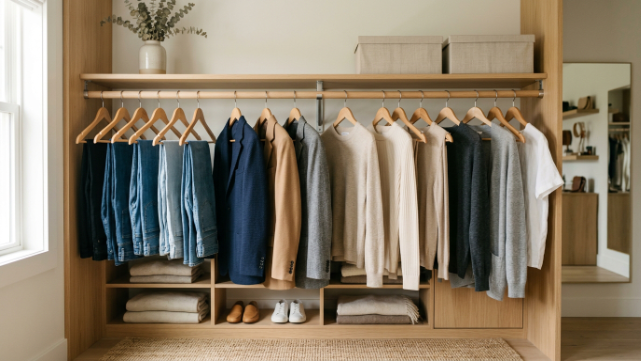
Open any closet anywhere and you’ll probably discover the same thing: too many clothes yet yet none to wear. That inconsistency is precisely why the capsule wardrobe concept keeps coming up every few years; it’s not truly about having less for the sake of having less. It’s about cutting the difference between your possessions and the amount you truly apply on your body.
At its most basic, a capsule wardrobe is a little, deliberately picked set of apparel where practically everything goes with almost everything else. You’re building a closet of pieces that mix in dozens of different forms instead of hundreds of clothes that only live in isolation.
The principle behind the number of things individuals enjoy quoting, usually between 30 and 40 pieces each season, is more important than the number itself: every piece ought to be actually working.
Why Most Wardrobes Fail Before They’re Even Full
The typical closet grows by accident. Here’s a sale, trends here, a “might need it someday” purchase never totally worn.
Over time, your clothes appear full but feel empty since so much of them don’t connect with anything else you own. The top you have has no bottom; the jacket lacks an outfit; the dress has no shoes that truly fit.
A capsule wardrobe helps one to unstick the process. You choose ahead of time what part every piece plays and make your purchase or retention thereof. It’s a change from gathering items to creating a system.
Start With an Honest Audit, Not a Shopping List
Before including anything else, check on what is currently hanging in your closet. Try on items you haven’t worn in months and pose two inquiries: is it exactly how you want it to fit right now; does it go with at least two or three other items you have? If the response is negative for both, it’s likely not capsule material regardless of your cost for it.
This step matters more than people expect. Most closets already contain the bones of a capsule wardrobe — a good blazer, a reliable pair of jeans, a top that goes with everything. The audit just makes them visible again.
The Core Categories Every Capsule Wardrobe Needs
Rather than chasing a rigid list, think in categories, then fill each one with pieces suited to your climate, job, and personal taste.
Bottoms that anchor everything. One well-fitting pair of jeans, a tailored trouser, and a neutral skirt or shorts depending on your climate cover most situations. These are worth spending a little more on, since they’re worn constantly.
Tops that layer easily. A few well-made t-shirts, a couple of button-downs, and one or two knits in colors that echo your bottoms. Solid colors do more work here than bold patterns, simply because they combine with more things.
One structured outer layer. A blazer, a trench, or a tailored jacket instantly makes casual pieces look more put-together, and works across seasons with the right layering underneath.
A dependable dress or two. Even for people who rarely wear dresses, one versatile option — easily dressed up or down — solves the “I have nothing to wear” panic faster than almost anything else.
Shoes that don’t fight your outfits. Two or three pairs, chosen for how often they’ll actually get worn rather than how they photograph, usually beat a shoe rack of options you never reach for.
Color Strategy Is Where Capsule Wardrobes Actually Succeed or Fail
The secret ingredient in a working capsule isn’t the pieces themselves — it’s the color palette tying them together.
Building around two or three neutrals (think navy, camel, black, or grey) with one or two accent colors gives you a wardrobe where almost anything can be worn with almost anything else.
Add too many unrelated colors and even great individual pieces stop cooperating with one another.
Building It Around Your Actual Life
For someone working from home, a capsule wardrobe varies from one appropriate for someone working in a client-facing corporate position and from a parent running about a playground with kids.
The structure is still the same: adaptable pieces, a coordinated palette, quality above amount. But the specific items ought to represent your actual daily activities, not an idealized version of your life.
Quality Over Quantity, Without the Guilt Trip
There’s a tendency in capsule wardrobe content to imply you need to buy expensive, sustainably made pieces immediately.
In reality, quality is relative to your budget. A $40 t-shirt that fits well and holds its shape is a better capsule piece than a $150 one that doesn’t suit you.
Cost-per-wear — the price divided by how many times you’ll realistically wear something — is a far more useful measure than price tag alone.
Give Yourself Permission to Adjust
A capsule wardrobe isn’t a one-time project you finish and never touch again. Seasons change, bodies change, jobs change, and your capsule should shift with all of it.
The goal isn’t perfection on the first attempt — it’s building a habit of buying and keeping only what actually earns its place in your closet.
FAQ
What is a capsule wardrobe, exactly?
A capsule wardrobe is a small, intentional collection of clothing — usually 30 to 40 pieces per season — chosen so that most items can be mixed and matched with each other, rather than existing as one-off outfits.
How many pieces should a capsule wardrobe have?
There’s no strict number, but many people find 30 to 40 pieces per season (excluding underwear and loungewear) hits a good balance between variety and simplicity. The right count depends on your lifestyle and climate.
Do I need to buy all new clothes to start a capsule wardrobe?
No. Most people already own several capsule-worthy pieces. Start with an honest closet audit before buying anything new, and fill in gaps gradually rather than replacing everything at once.
What colors work best for a capsule wardrobe?
A palette built around two or three neutrals plus one or two accent colors tends to combine most easily. This isn’t a rule for everyone, though — some people successfully build capsules around bolder personal color preferences.
Is a capsule wardrobe only for minimalists?
Not at all. It’s a framework for making a wardrobe more functional, which benefits anyone who feels like they own a lot of clothes but still struggles to get dressed.
How do I keep a capsule wardrobe from getting boring?
Rotate accessories, layering pieces, and one or two statement items seasonally. The base stays stable while small additions keep outfits feeling fresh.