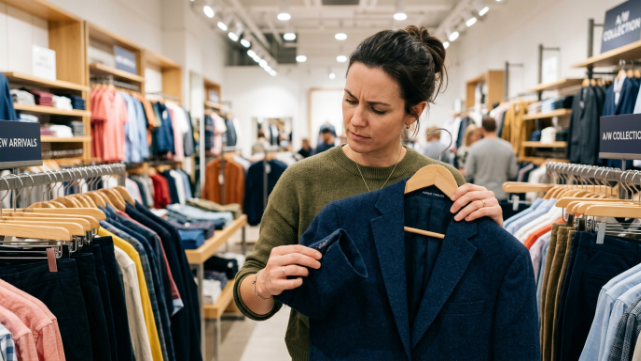
There’s an assumption baked into a lot of fashion advice: that looking put-together requires a certain amount of money. It’s a convenient story for brands, but it isn’t really true.
Some of the best-dressed people you’ll ever notice aren’t wearing the most expensive clothes in the room — they’re wearing clothes that fit well, suit them, and were chosen with more thought than budget.
Dressing well on a budget isn’t about finding secret cheap versions of expensive things. It’s a different approach entirely, built around a few core habits that matter far more than how much any single item costs.
Shift From “Cheap” to “Cost-Per-Wear”
The single most useful mental shift is replacing price tag thinking with cost-per-wear thinking. A $25 top worn twice before it stretches out or fades costs more, per wear, than a $60 top worn eighty times over three years.
Budget dressing isn’t always about spending the least amount possible upfront — it’s about spending in proportion to how much genuine use you’ll get out of something.
This reframing changes what’s worth splurging on. Items worn constantly — jeans, a daily coat, everyday shoes — deserve a bigger portion of your budget. Items worn occasionally, like a single event outfit, are exactly where spending less makes the most sense.
Buy Fewer Things, But Choose Them More Carefully
A typical budget error is buying more things to make up for less spent on each one. It usually backfires since a closet full of inexpensive, low-quality items still feels like it has “nothing to wear,” the clothing simply doesn’t hold up or go well together.
Selecting fewer, more adaptable items—even at a reasonable price—typically results in a more useful closet than a great volume of impulse purchases.
Learn to Spot Quality at Any Price Point
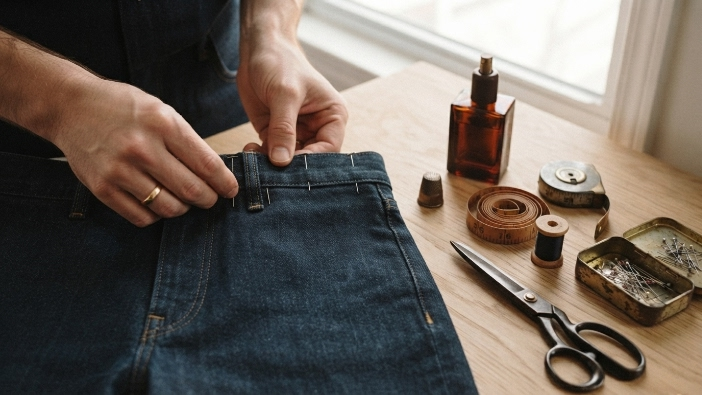
Price and quality are not as closely connected as people believe. Before making a purchase, checking a few details—like how a seam is finished, whether buttons feel safe, how a fabric feels when crushed in your hand, whether a design lines up at the seams—helps you identify better-made items inside reasonable prices instead than depending on a greater price to automatically indicate better quality.
Secondhand and Thrifted Pieces Are a Legitimate Strategy, Not a Compromise
Especially for better-quality basics, outerwear, and denim that often last over time, secondhand shopping has gone from a last resort to a genuinely clever plan.
Especially for products meant to last in the first place, thrift stores, consignment stores, and resale applications sometimes feature well-made items at a fraction of their original cost.
Timing Your Purchases Around Sales Cycles
Retail normally follows somewhat predictable seasonal trends; late winter sees coats go on sale; late summer sees discounts on summer clothing; end-of season clearance events happen dependably every year.
Rather than purchasing at full price the instant you need something, arranging more significant purchases around these cycles can significantly stretch a constrained budget over a year.
Tailoring Is an Underrated Budget Tool
Retail follows rather predictable seasonal trends; winter coats go on sale late winter, summer apparel gets marked down late summer, and end-of-season clearance events occur consistently each year.
Rather than purchasing at full price the instant you need something, planning more purchases around these cycles will significantly stretch a small budget over a year.
Tailoring Is Underestimated as a Budgetary Instrument.
Well-hemmed and in at the waist, a $30 pair of pants can appear more costly than a $100 set worn in the wrong size.
Usually, basic tailoring—hemming, narrowing a waistband, shortening sleeves—is less expensive than it seems and is among the most dependable ways to improve the appearance of inexpensive clothes.
Build Around a Small, Flexible Color Palette
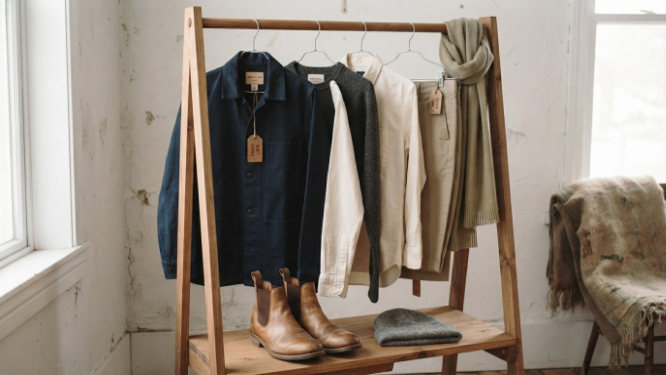
Budget wardrobes stretch further when pieces are chosen to coordinate with each other rather than picked individually.
A few colors that mix readily raises the total number of ensembles possible from a limited range of things—which counts much more when every buy is a major choice.
Accessories Offer the Best Return on a Small Budget
A well-picked belt, a flexible bag, or modest jewelry may revitalize the same basic clothes again without any need for new clothes purchases.
Accessories usually provide excellent value in relation to their price as they are worn with many different clothes.
Dressing Well on a Budget Is a Skill, Not a Compromise
None of this is about pretending a limited budget doesn’t matter — it clearly does. But dressing well within one is less about deprivation and more about developing sharper judgment: knowing what’s worth spending on, what isn’t, and how to make deliberate choices stretch further than scattered ones ever could.
FAQ
Can you actually dress well without spending a lot of money?
Yes. Dressing well depends more on fit, coordination, and thoughtful choices than on price. A smaller, well-chosen wardrobe often looks more put-together than a larger one bought without a clear strategy.
What is cost-per-wear and why does it matter for budget fashion?
Cost-per-wear is the price of an item divided by how many times you’ll realistically wear it. It helps identify where spending a bit more makes sense (daily-wear items) and where spending less is smarter (occasional-use pieces).
Is thrifting a good strategy for building a wardrobe on a budget?
Yes, especially for basics, denim, and outerwear, which are often made to last. Thrifted and secondhand pieces can offer significantly better quality per dollar than new fast-fashion alternatives.
How can I tell if a cheap clothing item is good quality?
Check the seams for even, secure stitching, test how the fabric feels when scrunched, look for pattern alignment at seams, and make sure buttons and zippers feel sturdy rather than loose.
Is it worth paying for tailoring on inexpensive clothes?
Often, yes. Basic alterations like hemming or taking in a waist are usually affordable and can make lower-cost clothing fit and look significantly better.
When is the best time to buy clothes on a budget?
End-of-season sales typically offer the biggest discounts — winter coats in late winter, summer clothes in late summer. Planning bigger purchases around these cycles stretches a limited budget further.
Do I need a lot of clothes to dress well on a budget?
No — a smaller wardrobe of versatile, coordinating pieces usually works better than a large collection of unrelated items, and it’s easier on a limited budget too.