Most people don’t actually have a “fit problem.” They have a proportion problem, a fabric problem, or a habit of buying clothes for the body they think they should have instead of the one getting dressed every morning.
That distinction matters, because body shape styling isn’t about disguising anything — it’s about understanding how a garment sits, moves, and balances against your particular frame so that clothes work with you instead of against you.
This is the part that gets lost in most body-shape content: there’s no such thing as a body shape that’s harder to dress. Most of what people call a “bad body shape for clothes” is really just a fit habit that hasn’t caught up with the body actually wearing it.
Once proportion, structure, and balance click for you, styling stops being guesswork. It becomes a toolkit you reach for on autopilot.
Here are ten mistakes I see constantly — in closets I’ve worked in, in comment sections, in that pile of “why does this not look right” clothes everyone seems to own — plus the fix for each.
1. Chasing the Number on the Tag Instead of the Fit
A size 8 in one brand fits like a 12 in another. Sizing was never standardized across the industry, so treating a tag number like a fixed identity leaves you with a closet full of things that technically “fit” but never actually sit right anywhere.
Fix: Try adjacent sizes without any attitude about it. Watch where fabric pulls, gaps, bunches — ignore the label entirely. A garment that skims cleanly in a size up will always beat one straining at the seams in a size that matches who you used to be.
2. Ignoring Proportion
Proportion is the single most underused styling tool. Two people can wear the exact same dress and look completely different — not because of body shape, but because of where the eye lands first. A too-long hem on a shorter frame, or a cropped jacket on someone with a long torso, changes the entire visual balance of an outfit.
Do this instead: Learn where your natural waist, hip, and torso proportions sit, then use hemlines, waistbands, and jacket lengths to work with those lines rather than cutting across them randomly.
3. Buying Purely on Trend
Trend pieces are fun, but a trend cut isn’t designed with your specific proportions in mind — it’s designed to look good in a lookbook. Buying a piece purely because it’s everywhere this season, without asking whether the cut suits your frame, is one of the fastest ways to end up with unworn clothes.
Do this instead: Interpret the trend rather than copying it exactly. If barrel-leg jeans are having a moment but overwhelm your frame, try a slightly straighter version in the same spirit. The trend’s energy survives; the fit problem doesn’t.
4. Getting the Length Wrong
Hem length is deceptively powerful. A skirt or trouser that hits at the widest part of the calf, for instance, tends to visually shorten the leg regardless of body type — it’s a fairly universal quirk of where the eye breaks.
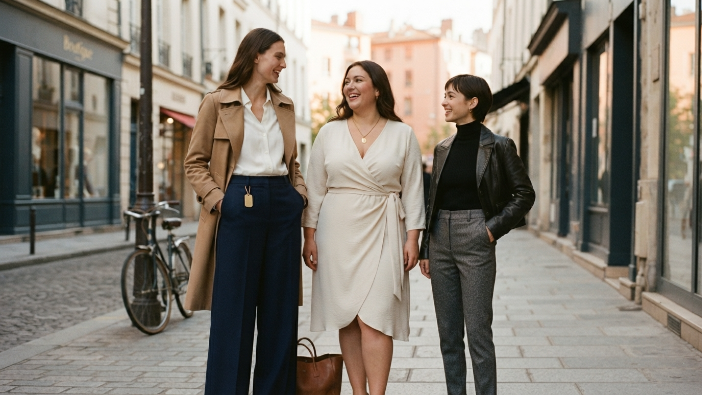
Do this instead: Test hems at the ankle, mid-calf, and knee before committing to a length. Small adjustments — even a tailor taking up an inch — often solve what felt like a much bigger styling problem.
5. Overlooking Fabric Structure
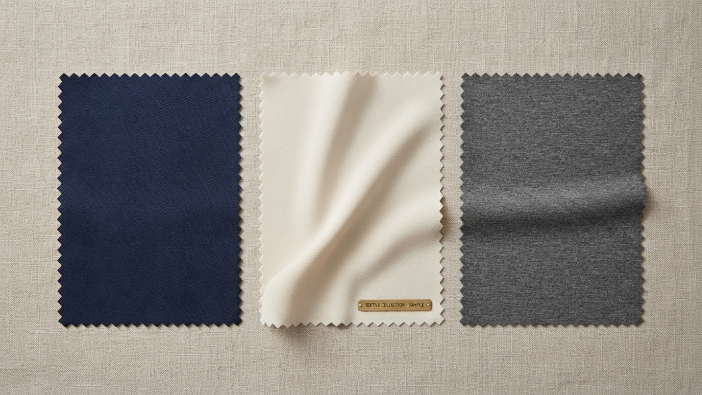
Fabric behaves like a supporting character in every outfit. A stiff, structured cotton holds its own shape and creates clean lines. A slippery viscose clings and reveals every movement. Neither is “better” — but wearing the wrong one for the silhouette you’re going for is a common, quiet mistake.
Do this instead: Match fabric weight to intention. Want structure and polish? Reach for cotton twill, denim, or ponte. Want fluid movement? Look for crepe or a good drape jersey. Read the fabric content tag before the price tag.
6. Not Understanding What Balance Actually Means
Balance is just the top half and bottom half of an outfit working together instead of fighting each other. Two voluminous pieces stacked can swallow your whole frame. Two fitted pieces stacked can feel stiff and flat. It’s a conversation between the pieces, not a rulebook about which body parts to hide.
Fix: If one piece is loose, let the other be more defined — not tight, just intentional. A relaxed blazer over straight trousers. A fitted top under wide-leg pants. Give the eye somewhere to land.
7. Trying to Hide the Body Instead of Define It
Camouflage dressing — oversized everything, black head to toe, zero structure anywhere — usually backfires. Formless clothing adds bulk rather than hiding it, because there’s nothing for the eye to actually follow.
Fix: Stop aiming to hide. Aim to define. A wrap top, a belt in the right place, a jacket with a real shoulder — any of these give the outfit a shape story, and shape almost always reads as more put-together than shapelessness ever does.
8. Ignoring How the Clothes Actually Feel on You
Plenty of “correctly styled” outfits fail for one boring reason: the person wearing them is uncomfortable. Tugging a waistband. Self-conscious about a neckline. Can’t sit down properly. Discomfort shows on your face before it shows in the clothes.
Fix: Physical ease isn’t optional. It’s a requirement. An outfit you can actually move in beats a technically flattering one you’re fighting with all day, every time.
9. Dressing for the Life You Wish You Had
A closet full of tailored blazers doesn’t help much if your actual days are spent on your feet, commuting, chasing kids around. Shopping for an aspirational life instead of your real one has nothing to do with body shape. It’s just a practicality mismatch.
Fix: Look honestly at your actual week before you buy anything. Build around what you do first. Bring in style and shape second.
10. Believing Some Bodies Are Just Easier to Dress Than Others
This last one isn’t really a styling mistake — it’s a mindset problem, and it quietly undermines everything else on this list. Fashion media has spent decades ranking body shapes like some are “easier,” which just pushes people toward hiding instead of styling.
Fix: Treat every outfit as a proportion puzzle, not a verdict on your body. The goal was never to look like a different shape. It’s to let the shape you actually have move, sit, and photograph the way real bodies do.
Expert Styling Tips
- Fit trumps size every time. A well-fitted mid-range piece will always outperform an expensive item in the wrong size.
- Shoulders are the most overlooked fit point. A jacket or blouse with shoulders that sit correctly instantly improves how the rest of the garment hangs.
- Vertical lines lengthen; horizontal lines widen — but placement matters more than the rule itself. A horizontal stripe at the collarbone reads differently than one at the widest part of the hip.
- Invest in tailoring before buying new. A $15 hem adjustment often transforms an outfit more than a new purchase would.
- Build a “true colors” palette. Wearing shades that suit your skin tone does more visible work than almost any cut decision.
- Layer with intention, not just for warmth. Each layer should add a defined line — a cropped jacket over a longer top, for instance — rather than just extra bulk.
Real-World Examples
1. Dove’s Campaign for Real Beauty and the fit of “flattering”
In 2004, Dove launched the Campaign for Real Beauty after internal research found that only a small fraction of women globally identified with the word “beautiful.”
The campaign used unretouched images of women with a range of body types, deliberately breaking from the industry’s narrow beauty standard.
What it revealed for styling, specifically, is that representation shifts how people evaluate their own reflection — readers who see a range of body types styled well are more likely to trust that their own body can be styled well too, rather than assuming they need to change first.
2. The rise of extended-size ranges from mainstream retailers
Over the past decade, brands including ASOS, Universal Standard, and Nordstrom have significantly expanded their size ranges rather than treating plus and extended sizing as a separate, smaller collection.
This shift reflects an industry-wide acknowledgment that fit — not a narrow size curve — determines whether clothing actually works on a body.
For readers, the lesson is practical: brands with wider size and fit ranges are more likely to have solved the proportion problems this article describes, because they’ve had to design for more body types from the start.
One More Real-World Example
Menswear tailoring culture has crossed over into how women shop, too, and it’s worth mentioning. Bespoke tailoring has always worked on one basic premise — nobody’s body matches an off-the-rack pattern exactly, so you adjust the garment, not the person.
As more womenswear brands start offering hemming and basic tailoring right at checkout, that same idea is becoming a normal expectation instead of a luxury one. “Flattering,” a lot of the time, just means “altered correctly.”
Conclusion
Body shape styling isn’t about correcting anything — it’s about understanding proportion, fit, and fabric well enough that clothes stop working against you. The ten mistakes above aren’t really about body type at all; they’re about habits that anyone can adjust once they know what to look for.
Start with one change — maybe it’s finally getting that blazer taken in at the shoulders, or paying closer attention to where a hem lands — and build from there. The goal was never a different body. It was clothes that actually fit the one you have.
Questions Worth Answering
What is body shape styling, really?
It’s just choosing cuts, proportions, and fabrics that work with your actual frame — not following one universal rule everyone’s supposed to follow regardless of how they’re built.
Do I need to know my “body shape category” to dress well?
No. Apple, pear, hourglass — these can be a decent starting point, but they’re a generalization at best. Paying attention to proportion and how fabric actually moves on you specifically works better than trying to fit yourself into a category.
Why does the exact same piece look different on me than it does on a model or a friend?
Torso length, shoulder width, where your natural waist actually sits — all of it changes how a garment falls. That’s proportion doing its thing. It’s not a flaw in the garment, and it’s not a flaw in you.
Is tailoring actually worth it for everyday clothes?
Usually, yes. A simple hem or shoulder adjustment on something you wear a lot can extend its life and improve how it looks more than just buying something new would.
What’s the fastest way to improve how my outfits look overall?
Start with fit at the shoulder and the waist. Those two points decide how the rest of the garment hangs off you.
Can trends actually work for every body type?
Most of the time, yes — if you adapt them instead of copying them exactly. Look at the proportion a trend is built on, then scale a version of it to your own frame.